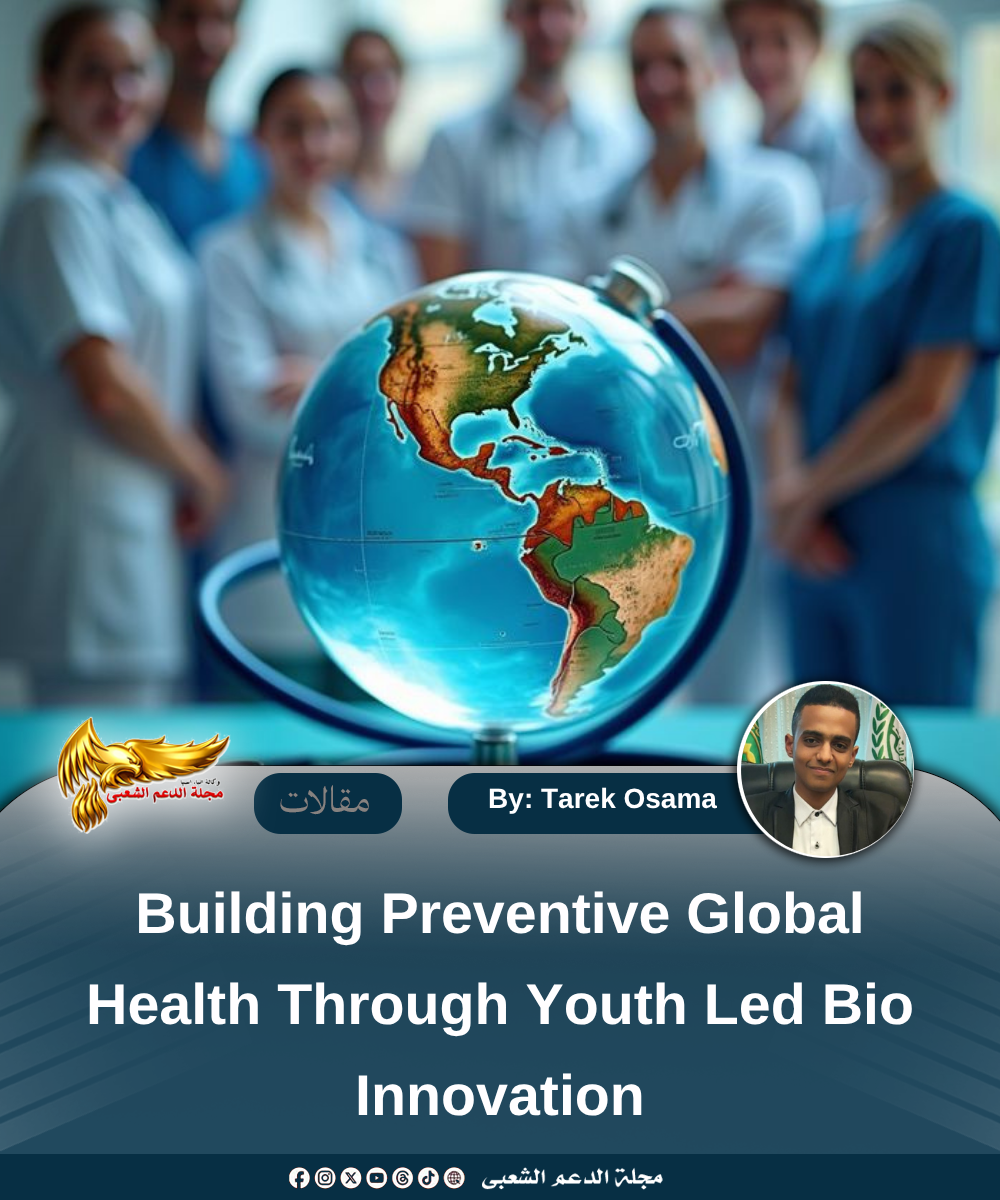
Building Preventive Global Health Through Youth Led Bio Innovation
By Tarek Osama
Preventive health is more important now than ever. This data shows the prevention is key to saving lives and reducing deaths in the world. Over the past 50 years, global vaccination efforts have saved at least 154 million lives that is equal to saving about 5_6 lives every minute thanks to vaccines (WHO/Lancet, 2024).
However about 14 million children every year do not get any vaccines at all leaving them vulnerable to preventable diseases (WHO/UNICEF, 2025). These gaps show that prevention is not just saving lives but also about justice in health around the world.
Global Vaccination Coverage
89% of children got at least one dose of the DTP vaccine (diphtheria, tetanus, pertussis) (WHO/UNICEF, 2025).
85% completed all three doses of the Vaccine.
More than 14 million children don’t get vaccines at all especially in Africa and South Asia (WHO, 2025).
Even with gaps vaccination has shown great results and global measles deaths dropped by about 70% between 2000 and 2024, and measles vaccines have prevented about 59 million deaths in the same period (WHO, 2025).
Global measles cases dropped by 71% between 2000 and 2024 from 38 million to 11 million per year.
The Burden of Preventable Diseases
The high number of unvaccinated children reflects gaps in protective systems. In 2025:
Over 130 countries reported measles cases, with around 60 countries experiencing big outbreaks (WHO/UNICEF/Gavi, 2025).
Vaccine preventable diseases include measles, polio, hepatitis and yellow fever.
Investing in prevention is also cost effective, every $1 spent on vaccines can save about $50–52 in healthcare costs in low- and middle-income countries (CDC, 2025).
Youth Led Bio Innovation
Youth make up about 40% of the world’s population and have big potential for social and scientific innovation. By involving young people in preventive bio innovation they can create solutions that fit local and global needs.
For example, youth programs supported by Gavi have helped vaccinate over 1.1–1.2 billion children since 2000, preventing millions of future deaths (Gavi, 2024).
Educational campaigns continue by youth organizations have increased vaccination rates by around 10–20% in targeted communities.
Bridging Gaps with youth innovation
Many gaps remain due to lack of funding, conflicts and misinformation. Studies show that funding shortages threaten vaccination progress and increase the burden of preventable diseases (WHO/UNICEF/Gavi, 2025). Supporting youth in developing innovative solutions like global student networks, biology labs and AI powered health analytics can significantly reduce disease rates and strengthen preventive culture.
Empowering Communities Through Youth Led Health Initiatives
Teens led health initiatives can make a big difference in local areas and communities. In 2025 programs created by students and young volunteers reached 30+ countries delivering vaccines and health education and early screening tools. Those programs helped to increase vaccination coverage by around 10–20% in areas where government outreach is limited.
Community campaigns led by youth promote preventive habits like handwashing, nutrition and disease awareness that reduce preventable illnesses by up to 20–40% in targeted regions. For example in some African and South Asian communities youth led mobile clinics provide over 1 million children with essential vaccines in one year (Gavi, 2024).
The Future Impact of Scaling Preventive Health
Looking ahead, expanding preventive health systems could transform global health outcomes on a massive scale:
Strengthening prevention strategies could reduce global mortality rates by around 20–30% by 2040.
Achieving full global vaccination coverage could prevent more than 2–3 million deaths every year particularly among children under five.
Economic projections also show that increasing investment in preventive health could [boost] the global economy over $3 trillion by 2030 through reduced healthcare costs and increased productivity.
Furthermore digital and youth driven innovations are expected to improve early detection and response to diseases by around 20–40%.
If current gaps are addressed the number of “zero-dose” children could be reduced by around 40–50% within the next decade.
Conclusion
Preventive health is not only a distant goal, it is real, measurable and effective. Historical and current data prove it. By investing in youth and enabling them to lead bio innovation, the world can not only maintain the gains in vaccination and prevention but also expand them to reach every child and community. Protective health starts with youth. Using their energy today means a healthier and fairer world tomorrow.